
The food we share, the tables we build around it
Pass the plate. Reach for another bite. Stay for one more story.
Hospitality has always been about more than what we serve. It's where people meet, what they share, and the conversations that linger. The right serveware helps bring those moments to life.
A table built for sharing keeps a meal unfolding, one dish leading to the next, and becomes the reason groups choose your restaurant for birthdays, holidays and every occasion worth marking.
Heading into the busiest stretch of the year, the pieces you serve on shape how food is presented, how quickly it moves, and how generous the whole experience feels.

Pass it around: platters built to be handed across the table
The workhorse of shared dining is the full-size oval serving platter. Its shape follows the length of a table better than a round, leaves room for glassware, and gives a composed dish somewhere to breathe. Just as importantly, an oval is easy to pick up and hand to the next person.
A few serving platters to consider:
-
Tides® Platter — organic edges that make a simple roasted fish or seasonal vegetable dish look composed
-
Mod Platter® — squared geometry that gives skewers, satays or dumplings a clean line to sit against
-
Harmony® Platter — A classic coupe shape highlights culinary creations, while a refined thin edge delivers sleek durability

Serve generously: bowls for dishes meant to be passed
Abundance can come from depth or from breadth. Serving bowls with high sides hold volume and keep sauce where it belongs. And low bowls open the dish up and spread it wide, so a grain salad or a plate of roasted vegetables reads generous across the whole surface rather than piled in the middle.
Choose the right bowl:
-
9.5" Oval Tall Kiln® Bowl (60 oz) — high sides for mussels, curries and anything with a sauce worth keeping
-
11.25" Round Artefact® Low Bowl (58 oz) — open and shallow, so the dish stays visible edge to edge
-
9.25" Round Mezze® Bowl - (36 oz) — wide and shallow, so a spread of grilled vegetables or flatbreads stays in view rather than stacked
.png)
Make it a centerpiece: statement pieces that turn food into part of the tablescape
Some pieces do more than hold a dish. They give the table a focal point—something with enough presence that the presentation becomes part of the tablescape itself.
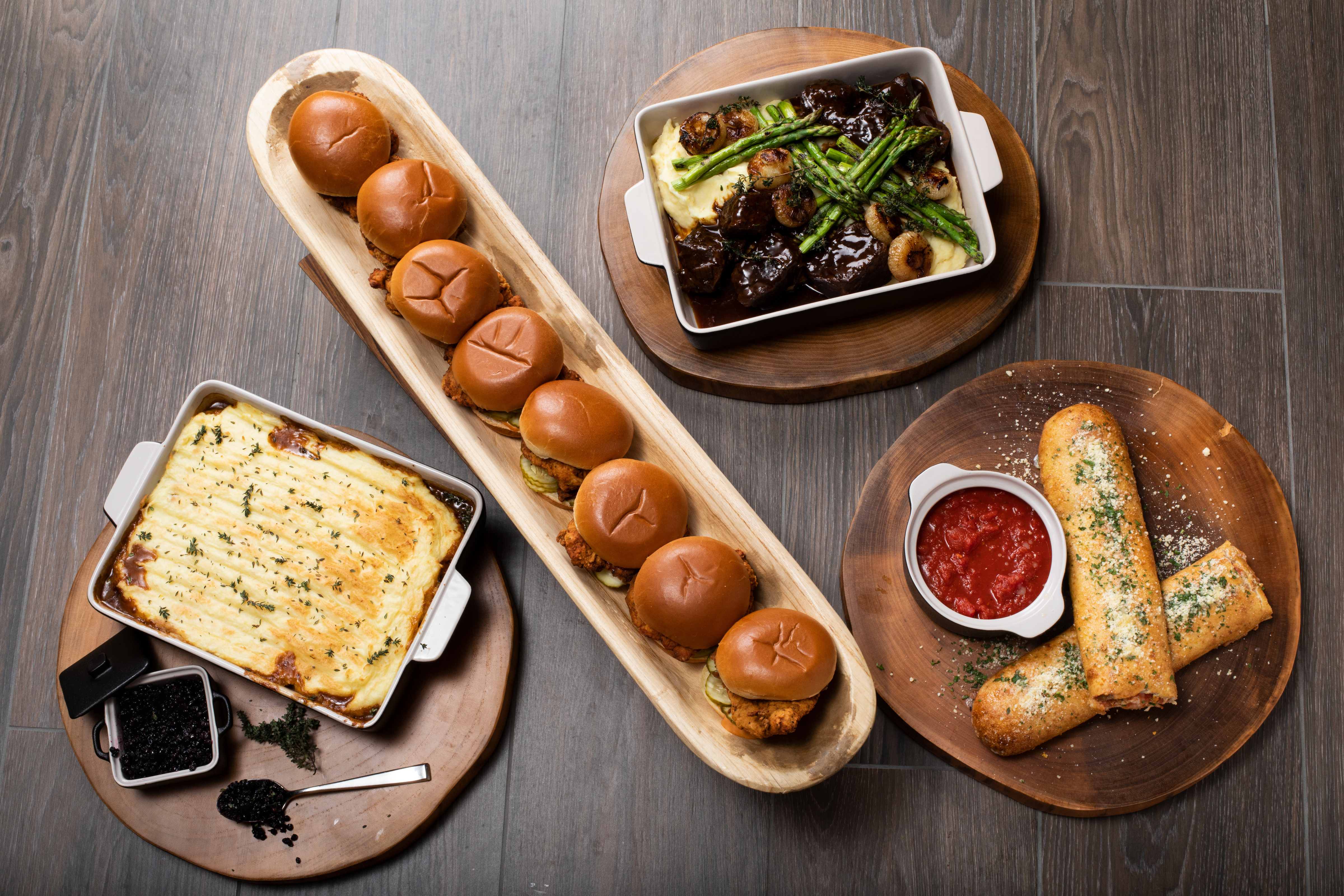
Wood serving boards are a natural fit here. Grain and texture bring a different material to the table, adding warmth and visual interest alongside porcelain and metal.
-
Asheville Board (30" x 8") — a wood serving board long enough to run the length of a communal table for charcuterie or bread service
-
Root Board (16" x 10") — a wide surface with room for a full grazing spread

Share the experience: pieces that encourage interaction across the table
The best shared tables give guests a reason to reach, serve themselves and keep the food moving. These pieces make that feel natural and inviting.
-
Crushed bamboo boards — light enough to lift and pass, with a texture that stands out against porcelain
-
Root® Boards and Servers — ultra-light, durable, and sustainably crafted from fallen trees, each ROOT® piece features its own unique texture and grain
-
Kiln® Ovenware — moves from oven to tabletop with ease. Tough, vitrified stoneware withstands temperatures up to 500°F.

Mix it up: layering materials for a distinctive culinary presentation
Mixing materials adds depth, contrast, and personality to the tabletop. Smooth porcelain alongside organic wood, brushed stainless steel, or textured surfaces creates a layered culinary presentation that feels curated and intentional. With versatile collections like Kiln® and Tides®, it's easy to create a look that is distinctly your own.
Explore more ideas in The Art of the Mix: How to Layer Materials for a Standout Culinary Presentation.
Getting ready for a season of gatherings
The months ahead bring more of everything that fills a table—larger parties, longer reservations, private events and groups that want to order across the whole menu rather than one dish each. That's a different kind of pressure on a tabletop program than a season of twos and fours.
It helps to think about the group sizes you'll actually be serving. A table of eight needs a serving platter that can reach both ends. A private dining room needs pieces that read well from a distance and hold up through a longer service.
From there, it's worth looking at where your current pieces fall short and what would fill the gaps.
